
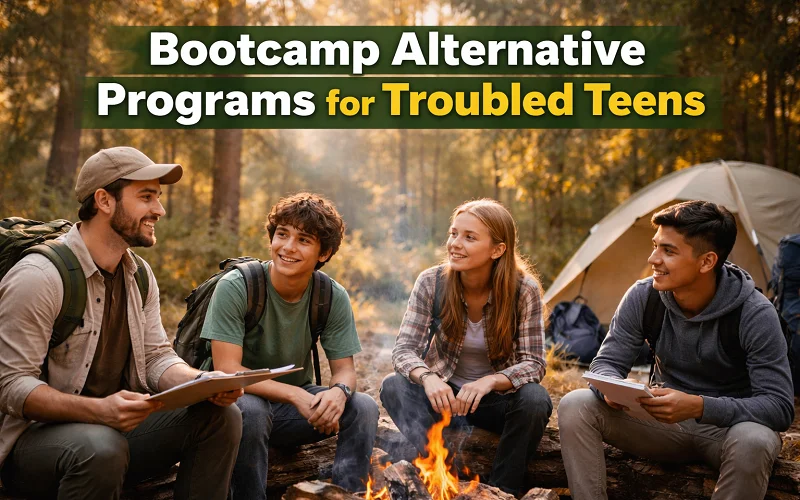

Many parents struggle when their teenager faces behavioral, emotional, or mental health challenges. Boot camps have been a common choice for decades, but they often rely on strict discipline rather than addressing the root causes of a teen’s struggles.
Alternative programs like therapeutic boarding schools, residential treatment centers, wilderness therapy, and specialized schools provide different approaches that focus on mental health support and long-term healing rather than punishment. These options provide various levels of structure and care depending on what a teen needs.
Understanding the differences between these programs helps parents make informed decisions about their child’s treatment. Each type of program serves different purposes and works better for certain situations than others.
Alternative Behavior Camps focus on emotional regulation and social skills development in a supportive setting
Many programs tailored for teen development go beyond traditional boot camps, providing a more comprehensive approach that focuses on emotional well-being and social growth. Avery’s boot camp alternative programs, for example, along with similar options, take a unique approach by helping teens manage their emotions and develop important social skills in a caring environment. Such therapies also teach important social skills in a caring environment.
Research shows that youth can develop leadership, emotional regulation, self-esteem, and supportive relationships at camps. Staff members at these programs use proven methods to help teens understand their feelings. They teach practical ways to handle stress and anger.
The camps create a safe space where teens can practice new skills. Small group sizes allow counselors to give more attention to each person. Teens learn how to communicate better with others and build healthy friendships.
These programs address issues like anxiety, depression, and behavioral problems. They focus on long-term growth rather than quick fixes through punishment.
Therapeutic Boarding Schools provide structured support with a focus on mental health healing.
Therapeutic boarding schools combine academic education with mental health treatment in a residential setting. These programs provide students a structured environment where they can address emotional and behavioral challenges while keeping up with their studies.
Students receive individual counseling and group therapy as core parts of their treatment. Many schools also include experiential activities like art therapy or equine therapy to support healing in different ways.
The residential format allows teens to step away from their regular environment. This gives them space to focus on their mental health needs without outside distractions. Staff members provide supervision and support throughout the day and night.
These schools differ from short-term bootcamp programs by emphasizing long-term therapeutic care. The treatment approach aims to help teens develop coping skills and address underlying mental health conditions. Most programs last several months to allow for meaningful progress in both academics and emotional growth.
Residential Treatment Centers Offer comprehensive care for behavioral and emotional challenges
Residential treatment centers provide round-the-clock support for teens facing serious mental health and behavioral issues. These facilities provide structured environments where young people receive intensive therapy and medical care as needed.
Staff members conduct thorough evaluations to understand each teen’s specific challenges. This includes assessing emotional, behavioral, and social needs. Treatment teams then create individualized plans based on these findings.
Teens participate in both individual and group therapy sessions. Many programs use evidence-based approaches like cognitive behavioral therapy and dialectical behavior therapy. These methods help teens develop healthier coping skills and address underlying issues.
The residential setting allows for consistent support throughout the day. Medical professionals can monitor medication when necessary. Family members often participate in therapy sessions to improve communication and relationships.
These centers work well for teens who need more intensive help than outpatient programs can provide. The structured environment helps young people focus on recovery without outside distractions.
Wilderness Therapy Programs Combine outdoor experiences with clinical guidance for personal growth
Wilderness therapy programs bring together outdoor activities and professional counseling in natural settings. These programs work with teens who face behavioral issues, mental health challenges, or substance use problems.
Licensed therapists lead sessions while participants engage in hiking, camping, and other outdoor tasks. The programs remove teens from their usual environments and negative influences. This creates space for them to focus on treatment without daily distractions.
Participants learn practical life skills through outdoor challenges. They also develop better coping strategies and healthier thought patterns through regular therapy sessions.
Research spanning over 20 years supports wilderness therapy as an evidence-based treatment option. State human services departments license these programs, and many earn accreditation from outdoor therapy organizations. The combination of nature-based activities and clinical work provides a different approach than traditional outpatient therapy or residential treatment centers.
Specialized Alternative Schools Tailor education and counseling to meet diverse teen needs
Alternative schools have operated since the late 1970s to serve students who struggle in traditional classroom settings. These programs create customized learning environments for teens facing behavioral issues, learning challenges, or psychological concerns.
Schools design individualized education plans that address each student’s specific needs. Teachers provide one-on-one instruction alongside small group sessions. This approach allows staff to adjust teaching methods based on how each teen learns best.
Counseling services form a core part of these programs. Students receive both individual and group therapy to work through personal challenges. Mental health professionals collaborate with teachers to support academic and emotional growth.
Alternative schools maintain close contact with families and home school districts. This communication guarantees everyone stays informed about the student’s progress. Many programs blend classroom learning with therapeutic interventions to create a complete support system.
These schools serve students with varied backgrounds and circumstances. Some teens need temporary support during difficult periods. Others require longer-term assistance to build skills for future success.
Conclusion
Boot camp alternative programs provide a more effective path forward for struggling teens. These programs focus on therapy, emotional support, and skill-building rather than strict discipline alone. Research shows that compassionate approaches like wilderness therapy and residential treatment create lasting positive changes in behavior and mental health.
Parents should consider programs that address the root causes of their teens’ struggles. The right alternative program provides professional counseling, a safe environment, and tools for long-term success.