Most people search Nerovet AI smart dentistry because they want a clear answer: is this a real tool, and should I trust it with a pet’s mouth? You will see two stories online. One copies human dental AI talking points. The other matches the product. Nerovet is built for pet dental images, clinics, and owners, not for human implant planning.
This guide cuts the noise. You will learn what the tool does, what it misses, and how to use it without false comfort.
What Nerovet AI Smart Dentistry Is
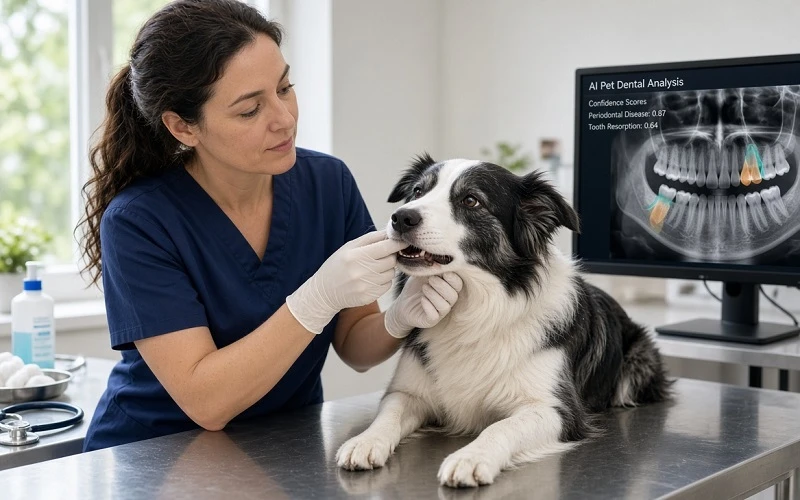
Nerovet AI smart dentistry is software that reads pet dental photos and X-rays. It flags likely problems so a veterinarian can confirm them. It does not replace a licensed vet.
The official site focuses on dogs, cats, and clinic workflows. It talks about periodontal disease, tooth resorption in cats, root abscesses, and fractures. It does not claim FDA clearance as a human radiograph system like Overjet or Pearl.
Use it as a second set of eyes. That is the honest job.
Quick check: If you need AI for human bitewings or CBCT, this is the wrong category.
Why Pet Dental Disease Makes This Tool Matter
Pet dental disease hides in plain sight. By age three, about 80% of dogs and 70% of cats show signs of dental disease. Pets rarely complain. Bad breath looks like a small issue. Pain sits under the gumline.
A visual look at the teeth is not enough. Many dogs and cats have disease below the gumline that only dental X-rays reveal. Specialists still push full-mouth films during dental procedures for that reason.
That gap is the real use case. Owners delay care. Clinics struggle to show why a cleaning and radiographs matter. A clear overlay on an image can move the conversation from “maybe later” to “let’s treat this tooth.”
Example: A small-breed dog with “only dog breath” often already has bone loss. Waiting for dropped kibble means you are treating late disease.
How Nerovet AI Smart Dentistry Works
The steps stay simple. The decision after the report is the hard part.
1. Get a clean image
Clinics take intraoral X-rays under anesthesia. Owners who use photo screening need sharp, well-lit shots with the lips lifted. Dark, blurry, or closed-mouth photos waste the model.
2. Upload the file
You send the image to the cloud. Clinics can push radiographs from gear they already own. You do not buy a new machine just to test AI.
3. The model marks anatomy, then risk
The software finds teeth, bone, and roots. It compares those patterns with trained examples of disease. Reports often arrive in seconds with highlights and confidence scores.
4. A clinician confirms the finding
The report is a map. The vet still probes the mouth, reads the film, and chooses treatment.
Tip: Write your own findings first. Then open the AI report. That habit stops you from rubber-stamping the overlay.
What It Can Catch and What It Misses
Nerovet-style tools work best on problems that show up on images.
Stronger fits
- Periodontal bone loss
- Cat tooth resorption
- Fractured crowns or roots
- Signs of root abscess
- Retained roots
Weak or missing
- Soft-tissue disease with no bone change
- Pain and chewing trouble
- Tartar hidden under the gum
- Very early lesions before the X-ray changes
- A phone photo that “proves” the roots are fine
Vendor pages cite about 94% accuracy and 92–98% agreement with specialists. Treat those numbers as company claims. Image quality, species, and film type all change results. The same materials also note that AI can miss pathology and cannot replace a hands-on exam.
Example: A cat tooth can look intact while the root is resorbing into bone. An AI mark on a dental film can save that tooth from snapping during a “routine” cleaning.
Nerovet vs Human Dental AI
This table saves most readers a wasted demo.
| Tool | Built for | Typical input | Best use |
|---|---|---|---|
| Nerovet AI smart dentistry | Pets and vet clinics | Pet X-rays; some owner photos | Screening and owner education |
| Overjet | Human clinics and payers | 2D dental X-rays | FDA-cleared caries support |
| Pearl | Human clinics | 2D and 3D dental imaging | FDA-cleared 2D/3D analysis |
Human tools sell into regulated clinic and insurance workflows. Nerovet sells into an overlooked pet market with simpler pricing. Public reviews have listed a free tier, about $9.90 a month, and a $199 lifetime plan. Confirm live pricing before you budget.
Opinion: A human dental group should not buy this as a Pearl substitute. A small-animal clinic can pilot it on real films and keep the vet in charge.
How Pet Owners Should Use It
Do not skip the vet because an app looks calm.
- Lift the lips. Shoot left, right, and front in good light.
- Note smell, drooling, pawing at the face, or sudden picky eating.
- Run the scan if you use the owner flow.
- Treat any warning as a reason to book this month.
- If the scan looks clean but the breath is foul, still go in.
Photos cannot see roots. X-rays still matter.
Tip: Ask your clinic, “If we clean the teeth, will you take full-mouth dental X-rays?” That question beats any app score.
How Clinics Should Pilot It
Run 25 dental cases. Read the films yourself first. Then run Nerovet. Track three things only:
- Minutes saved
- Extra findings that changed treatment
- Owner yes-rate when you show the overlay
Keep a note in the record: “AI screening reviewed. Clinician confirmed or rejected finding X.”
That 30-day test tells you if Nerovet AI smart dentistry fits your case mix. Marketing will not.
FAQs About Nerovet AI Smart Dentistry
What is Nerovet AI smart dentistry?
- It is an AI tool that analyzes pet dental X-rays and images.
- It highlights likely oral problems so a veterinarian can confirm diagnosis and treatment.
- It is decision support, not a stand-alone diagnosis.
Is Nerovet for human teeth or pets?
Pets. The official product targets dogs, cats, and veterinary clinics. Human dental AI platforms such as Overjet and Pearl are a different category.
How accurate is Nerovet AI smart dentistry?
Public materials claim roughly 94% accuracy and 92–98% agreement with veterinary dental specialists. Those figures come from vendor testing language. Results drop when images are poor, and the tool can still miss disease.
Can it replace a vet visit or dental X-rays?
No. It cannot judge pain, soft tissue, or hidden root disease from a casual photo. Full-mouth radiographs and a clinical exam still decide treatment.
How much does it cost?
Reported plans include a free option, about $9.90 per month, and a $199 lifetime plan. Check the current checkout page, because public pages have not always shown one clean price list.
Final Take and Next Step
Nerovet AI smart dentistry helps when you treat it as a map for pet oral care. It can speed a film read and help an owner see why a tooth needs care. It cannot replace a vet, anesthesia-based diagnostics, or full-mouth X-rays.
Use it to spot risk earlier. Then let a clinician finish the job.
Do this today: Open one recent pet dental case. Write your findings. Run an AI read. Circle every disagreement. That short test will tell you if Nerovet AI smart dentistry is worth a full pilot in your home or clinic.
Disclaimer
Nerovet AI smart dentistry is a screening and decision-support tool, not a diagnosis. Image results can be wrong. They do not replace a veterinarian, a hands-on oral exam, or dental X-rays. Always confirm findings with a licensed vet before treatment. Product features, accuracy claims, and prices can change.