
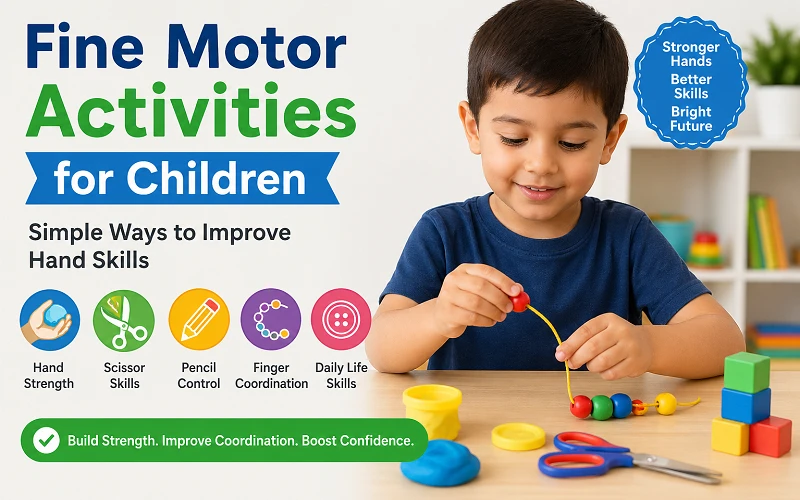
Children use their hands all day to button shirts, hold pencils, zip jackets, and use utensils. These small movements depend on fine motor skills, which control the muscles in the hands and fingers. If a child struggles with these tasks, simple daily routines can feel hard and slow.
You help children improve hand skills by giving them simple, hands-on fine motor activities that build finger strength, coordination, and control through play and daily tasks. For example, playdough, cutting with scissors, drawing, bead stringing, and sponge play all build grip and hand control. In addition, hand strengthening exercises support better pencil grasp and tool use.
This article explains what fine motor skills are and why they matter for daily life and school tasks. It also shares practical activities that help children gain stronger, more controlled hand movements at home or in class.
Understanding Fine Motor Skills in Children
Fine motor skills involve small muscle movements in the hands and fingers. These skills develop over time and affect how a child eats, dresses, writes, and plays.
Signs of Fine Motor Difficulties
Some children struggle to use their hands with control and strength. They may avoid tasks that require precise finger movements.
Common signs include:
- Trouble holding a pencil or crayon
- Messy or slow handwriting
- Difficulty with buttons or zippers
- Poor scissor control
- Frequent hand fatigue
In addition, a child may press too hard or too lightly on paper. Teachers might notice that the child falls behind in written work. Parents may see frustration during homework or self-care tasks.
Early support makes a difference. Targeted exercises such as those found in https://soundsory.com/fine-motor-activities/ can guide structured hand practice and build better coordination over time.
Developmental Stages of Fine Motor Skills
Fine motor skills start in infancy and build step by step. A baby first grasps a finger, then holds a toy with the whole hand. By 9 to 12 months, many babies use a pincer grasp to pick up small pieces of food.
Toddlers begin to stack blocks, turn pages, and hold crayons with a fist. As a result, they gain better control of the wrist and fingers. Preschoolers then learn to cut with scissors, draw simple shapes, and button large buttons.
In early school years, children refine pencil grip, write letters, and tie shoes. Each stage depends on practice and muscle control. Parents can support progress with structured fine motor activities that match the child’s age and skill level. Regular practice helps the brain and hands work together with more accuracy.
Importance of Fine Motor Skills in Daily Life
Fine motor skills affect many daily tasks. A child uses them to brush teeth, open lunch containers, and manage clothing fasteners.
In school, hand control supports writing, drawing, and computer use. Clear handwriting helps teachers read and assess work. As a result, children with stronger hand skills often complete tasks with more confidence.
Fine motor control also supports play. Building with small blocks, completing puzzles, and stringing beads all require steady finger movements. These tasks help develop focus and patience.
Therefore, steady practice in daily routines and play strengthens independence. Strong hand skills allow children to care for themselves, complete schoolwork, and take part in group activities with less frustration.
Effective Fine Motor Activities to Enhance Hand Skills
Children build stronger hands through simple, hands-on tasks that target grip, control, and finger movement. Focused practice with tools, small objects, and daily routines helps them gain better control of writing, dressing, and self-care.
Hand Strengthening Exercises
Strong hand muscles support better control and endurance. Therefore, children need regular practice that challenges the fingers, thumb, and wrist.
Play-dough works well. A child can squeeze, roll, pinch, and press it flat with the palm. He or she can also hide small beads inside and pull them out to build finger strength.
Other helpful exercises include:
- Squeeze a stress ball or soft foam ball
- Use spray bottles to water plants
- Clip clothespins onto a box edge
- Tear paper into small pieces
Each task targets grip or pinch strength. In addition, tools such as child-safe tongs or tweezers help build thumb and finger control. Short sessions of 5 to 10 minutes, several times a week, build strength without hand fatigue.
Activities for Improving Pencil Grip
A proper pencil grip helps a child write with control and less strain. Therefore, short and structured practice works best.
Broken crayons or small pencils encourage a tripod grasp because the child must use the thumb, index, and middle finger. This grip gives better control than a full fist grasp.
Structured tasks also help. For example:
- Trace simple shapes
- Color inside bold outlines
- Connect dots
- Draw vertical and horizontal lines
In addition, place the paper at a slight angle and support the forearm on the table. This position improves wrist stability. If the grip looks awkward, gentle verbal reminders and visual models guide correction. Short practice sessions reduce hand fatigue and help build steady control over time.
Manipulative Play With Small Objects
Small objects train precision and hand-eye control. As a result, children gain better coordination for tasks such as buttoning and zipping.
Beads, buttons, and coins work well. A child can sort them by size or color, stack them, or drop them into a narrow slot. Stringing beads onto a lace builds bilateral hand use because one hand holds the string and the other moves the bead.
Other useful play ideas include:
- Build with small blocks
- Complete simple jigsaw puzzles
- Use pegboards
- Screw and unscrew jar lids
Each activity requires finger isolation and careful placement. However, adults should supervise small items to prevent choking. Short, focused play sessions support steady skill growth.
Incorporating Fine Motor Practice Into Daily Routines
Daily routines offer many chances to build hand skills. These tasks feel natural and give repeated practice.
During meals, a child can use a fork and spoon, open snack containers, or pour water from a small pitcher. At home, he or she can button shirts, zip jackets, and pull up socks.
Art time also helps. Cutting paper with child-safe scissors builds hand strength and coordination. Folding paper or peeling stickers adds finger control.
Simple chores support skill growth as well. A child can wipe a table with a cloth, sort laundry by color, or pick up small toys. Regular practice through daily tasks builds stronger hands and better control without extra equipment.
Conclusion
Children build strong hand skills through simple, hands-on tasks such as playdough work, cutting, drawing, and button practice. Regular practice at home and school helps them gain control, coordination, and confidence in daily tasks.
Parents and teachers support this growth by offering clear guidance, steady routines, and patient feedback. With steady effort and age-appropriate activities, children improve hand strength and fine motor control that support school success and independence.
All activities should be age-appropriate and supervised by an adult. If you have concerns about your child’s motor development, consult a pediatrician or therapist.