
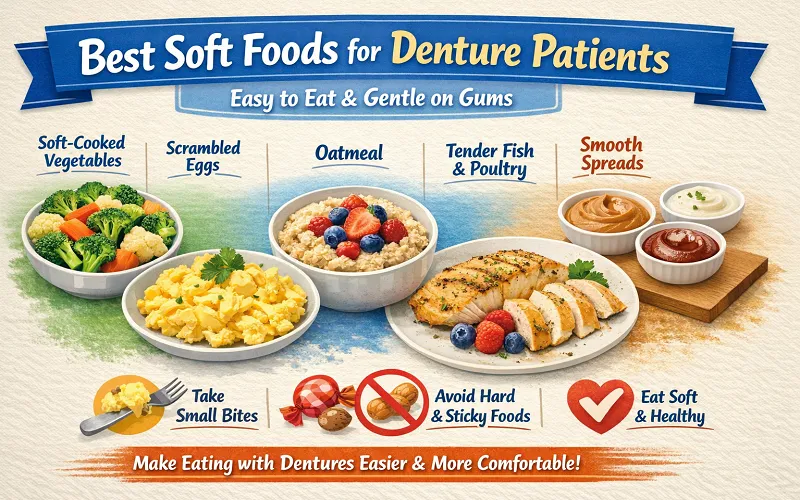
The use of new dentures can be difficult at first. Your gums might feel sore and chewing can feel tough. Eating too soft or healthy foods like crushed vegetables or yogurt and soups can make it less disturbing and gentler on your gums.
Trying the slightly firmer foods helps your bite get stronger and makes chewing easier. It’s best to request a professional dentist for instructions on what to eat and how to care for your dentures.
A dentist Livingston can give you personalized advice and help you get used to your dentures more quickly and keep your mouth healthy.
1. Soft-Cooked Root Vegetables
Soft-cooked root vegetables are stress-free to eat and good for your health particularly if you wear dentures. They are soft so chewing is stress-free, and they still offer essential vitamins and fibre. Cooking them gently keeps them healthy and does not hurt your mouth.
You can make them soft and tasty in these ways:
- Steamed carrots – soft and sweet.
- Mashed sweet potatoes – creamy, easy to swallow, full of vitamin A.
- Boiled parsnips – soft and slight, easy to digest.
- Soft turnips – good for the gums and low in calories.
Cut them into small pieces and avoid roasting until they’re crispy first. Soft-cooked root vegetables are healthy and stress-free to eat.
2. Scrambled Eggs with Add-Ins
Eggs are soft and easy to chew which making them good for people with new dentures. They have protein and can be made healthier with a few more ingredients. Soft, fluffy eggs are stress-free on your gums.
Try adding:
- Finely chopped spinach – offers vitamins and minerals, still soft.
- Soft cheese – adds calcium and makes eggs creamy.
- Diced avocado – adds healthy fat and smooth texture.
- Mild herbs – make eggs delicious without overcooking.
Soft or fluffy eggs provide protein that helps your gums settle. They are easy to eat and support you in having a healthy and comfy meal.
3. Oatmeal and Warm Cereals
The warm cereals, like oatmeal or cream of wheat and soft porridge are gentle on sore gums or new dentures because they are soft and easy to chew. You can make them tastier and healthier after adding some mashed bananas or ground flaxseeds, soft berries or a little honey.
Make sure cereal is not too hot as heat can hurt sensitive gums. Stir it well so it stays smooth and easy to eat. Eating these cereals often can help people with dentures chew more comfortably and enjoy a healthy and filling breakfast.
4. Tender Fish and Flaked Poultry
The soft proteins are helpful when you are getting used to new dentures. They are easy on your gums and offer your body the nutrients it wants to settle and stay healthy. Eating the soft fish and chopped poultry-can make meals easier and more comfortable.
- Baked or steamed fish: Salmon or cod and tilapia are soft. Break them into minor pieces, so they are easy to grind and swallow.
- Canned fish: Soft tuna or sardines are easy to eat and can be mixed with sauces to keep them moist.
- Slow-cooked poultry: Moist chicken or turkey, cut or shredded is kind on your gums. Avoid dry or crunchy meat.
- Health benefits: Fish has omega-3s which can help keep your gums healthy and lessen puffiness.
Eating these soft proteins helps you adjust to dentures and keeps your gums healthy.
5. Smooth Nut Butters and Soft Spreads
Smooth nut butters and soft spreads are good for the people with new dentures. They offer protein or healthy fats and taste but don’t want much chewing. Soft foods help with dentures in place and end pain while eating.
You can try spreading a thin layer on:
- Soft whole-grain bread – stress-free to bite.
- Crackers soaked in soup – soft and kind to chew.
- Banana slices – sweet and healthy.
Other soft options are:
- Hummus – creamy and full of protein.
- Avocado spread – smooth and healthy.
- Cream cheese – soft and easy to spread.
Choose smooth, not chunky and eat slowly in minor bites. These spreads make eating easier or harmless and delicious.
Final Thoughts
To conclude, getting used to dentures takes time, but eating soft and easy foods can help. Foods like cooked vegetables, eggs or tender fish and warm cereals are good for your gums and offer your body energy.
At first, avoid tough, sticky or crunchy foods and try new foods bit by bit as your mouth gets used to them. Take small bites or chew gradually and eat carefully to avoid any discomfort.
Eating a balanced diet keeps you healthy, while your mouth adjusts. Anybody new to dentures can enjoy eating yet again without discomfort or concern with patience.